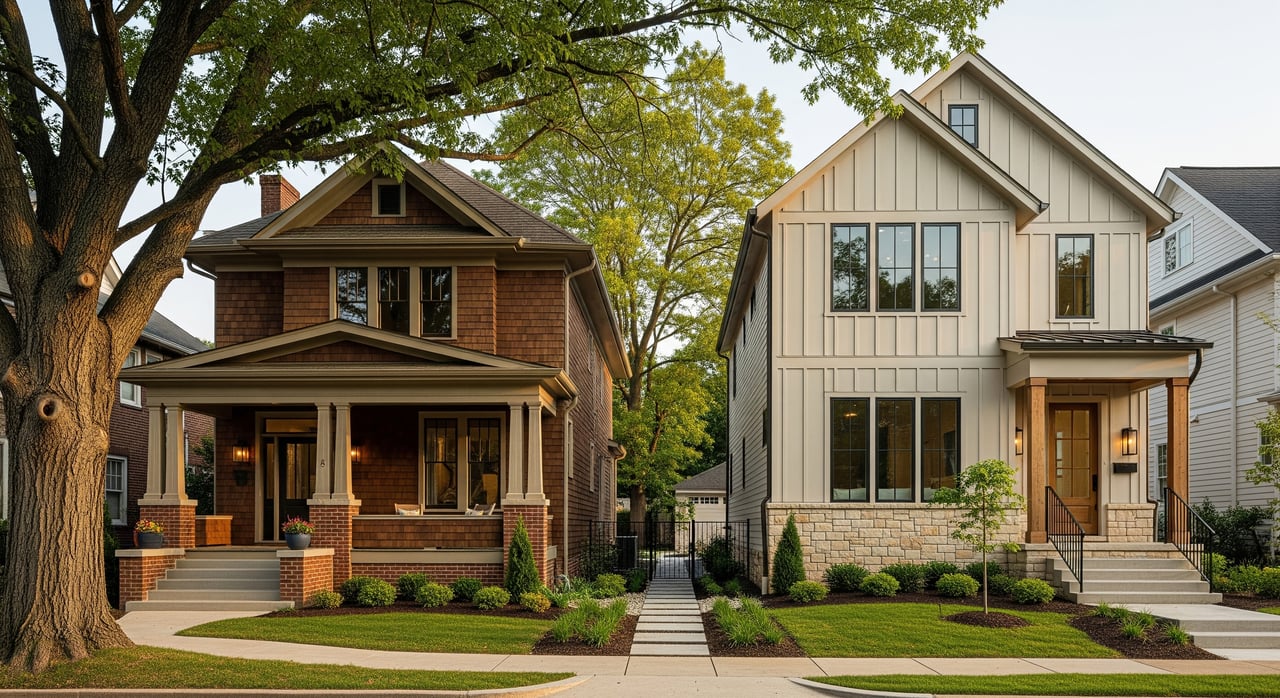
Should you choose the soul of a 1930s bungalow or the turnkey ease of a recent build in Sylvan Park? If you love this close-in Nashville neighborhood, you are likely weighing charm against convenience. Both paths can be great choices here, but they come with very different tradeoffs in maintenance, energy use, outdoor space, and rules. This guide breaks down what matters in Sylvan Park so you can choose with confidence. Let’s dive in.
What “historic” and “new” mean in Sylvan Park
Sylvan Park blends early-to-mid 20th-century bungalows and craftsman-style homes with a steady wave of 21st-century infill. Many original homes were built before 1940. Newer properties are often infill builds that replace an older house or rise on a subdivided lot.
Nashville’s humid subtropical climate plays a role in your decision. Hot, humid summers and mild winters affect cooling loads, moisture control, and how foundations and drainage perform. Keep this context in mind as you compare options.
Maintenance and condition
Historic bungalows: what to expect
Older Sylvan Park homes may carry original or aging systems. Electrical can include older wiring or fuse panels. Plumbing may include galvanized pipes. Many will have minimal insulation, original windows, and older roof materials.
Homes built before 1978 may contain lead-based paint. Some pre-1950s work could include asbestos in specific materials. Testing and remediation are common steps when you renovate. Crawlspaces, shallow foundations, and drainage often need attention to prevent moisture issues.
Quick inspection checklist for historic bungalows:
- Ask about electrical updates, panel type, and any remaining older wiring.
- Check supply plumbing and sewer lateral material and condition.
- Review roof age, attic ventilation, and any past water intrusion.
- Confirm permits for past renovations or additions.
- Test for lead-based paint if pre-1978; consider asbestos testing if you plan to remodel.
New construction and recent infill: what to expect
Newer Sylvan Park homes offer modern wiring, plumbing, HVAC, and insulation. Immediate big-ticket replacements are less likely. That said, construction quality varies. You may see settling cracks, grading issues, or exterior drainage concerns, especially on newly infilled lots.
Many newer builds carry a builder warranty. Verify coverage and transferability. Also look at landscaping. Infill projects often remove mature trees, and new yards can take years to establish shade and effective stormwater control.
Quick inspection checklist for new construction:
- Evaluate grading, downspout extensions, and lot drainage.
- Inspect exterior finishes and flashing details.
- Review HVAC sizing and ventilation plans.
- Document warranty coverage periods and exclusions.
- Walk the lot for signs of settlement or unfinished punch-list items.
Energy efficiency and comfort
Historic homes often have under-insulated walls, single-pane windows, and older HVAC, which can raise energy bills and affect comfort. Upgrades like attic and selective wall insulation, storm windows or historically compatible replacements, duct sealing, and HVAC updates help. Retrofit work is feasible, but it can be invasive and costlier.
Newer infill homes are usually built to modern standards, with better insulation, newer HVAC, and efficient fixtures. Airtight homes need proper ventilation in humid climates to control moisture and maintain indoor air quality. The U.S. Department of Energy offers helpful guidance on upgrades and efficiency strategies for every home type. You can review broad best practices in the DOE’s Energy Saver resources by visiting the U.S. Department of Energy guidance on energy upgrades.
Lot and outdoor space
Historic bungalows often sit on wider or deeper lots with mature trees and porch-forward streetscapes. The human-scale setbacks add to Sylvan Park’s feel and walkability. Shade and privacy may be better from day one.
New infill can occupy smaller subdivided lots or expand a footprint on an original parcel. Larger massing and a higher ratio of impervious surface can influence drainage and stormwater management. Consider how yard size, privacy, and parking patterns fit your daily life.
Architecture and layout
Historic bungalows bring character: exposed rafter tails, tapered porch columns, original windows and woodwork, and built-ins. If you value architectural details, this charm is hard to replicate. When you renovate, choose repairs and replacements that respect the home’s fabric.
Infill homes in Sylvan Park tend to offer contemporary massing and materials, often with open kitchens, larger suites, and modern storage. If you want a move-in-ready layout, new construction may deliver that experience.
Zoning, overlays, and HOA basics
In Nashville, zoning and overlay districts can shape what you can change on a property. Some neighborhoods use conservation or historic overlays that set standards for exterior work or demolition. Always verify a specific property’s status before you write an offer.
How to verify rules and records:
- Overlays and zoning: Check Metro Nashville Planning Department resources. You can explore zoning and overlay information through the Metro Nashville Planning Department.
- Parcel data: Review lot lines, zoning, and assessment details with the Davidson County Property Assessor’s GIS.
- Covenants and HOAs: Search recorded restrictions, plats, and HOA documents at the Davidson County Register of Deeds.
- Permits: Review construction and code records through Metro Codes and building permits.
If a property sits inside a historic or conservation overlay, exterior changes may require review. Some recent infill or condominium-style builds can carry HOA governance. Ask for all HOA and covenant documents early in your review period.
Financing, insurance, and resale
Historic bungalows can require specialized financing if major systems or structure need work. Insurance may cost more until key updates are completed. Charm and location support resale value, but outcomes depend on how well updates preserve function and character.
New infill typically qualifies for standard financing and can command a higher price per square foot based on finishes and square footage. Resale will reflect how the design aligns with Sylvan Park’s scale and streetscape. Extreme massing or poor fit can dampen appeal.
Side-by-side comparison
| Category | Historic Bungalow | New Construction/Infill |
|---|---|---|
| Structural age & capital needs | Higher likelihood of near-term projects and possible hazard remediation | Lower immediate needs; potential builder warranty |
| Energy & comfort | Typically lower efficiency; upgrades often needed | Built to modern codes; better insulation and HVAC |
| Architectural character | Original woodwork, built-ins, porch-forward layout | Contemporary layouts, larger kitchens, multi-story |
| Lot & streetscape | Mature trees, traditional setbacks, human scale | Larger massing, smaller yards, different setback patterns |
| Maintenance cost | Higher cumulative maintenance; costs can be front-loaded | Lower immediate maintenance; watch landscaping and exterior finishes |
| Rules & governance | Possible historic overlay; often no HOA | May include new covenants or HOA in planned developments |
| Market perception | Appeals to buyers seeking authenticity | Appeals to buyers wanting turnkey convenience |
| Inspection focus | Lead paint, asbestos, older systems, foundation, drainage | Construction quality, grading/drainage, ventilation, warranty items |
How to evaluate a specific listing
When a property catches your eye, request documentation. Ask for seller disclosures, any prior inspection reports, and permits for major work. For historic homes, utility bills can help you understand energy use. For newer builds, ask for all warranty documents.
Recommended specialized inspections:
- Pre-1978 homes: Review EPA lead-based paint resources to plan testing and safe practices.
- Considering renovation: Consult National Park Service Standards for Rehabilitation for best practices.
- Energy and ventilation: Use the U.S. Department of Energy’s Energy Saver resources for upgrade priorities.
- Local history and incentives: Explore Tennessee Historical Commission programs for guidance.
Practical negotiation tips:
- If inspections uncover hazards or failing systems, request seller repairs, credits, or escrow at closing.
- For older homes, get bids from licensed contractors and confirm permits. Use documentation to support price adjustments.
- For new builds, list warranty items and punch-list repairs in writing and confirm completion timelines.
What this means for your decision
If you prize original craftsmanship and mature outdoor spaces, a Sylvan Park bungalow may feel like home. Expect more up-front diligence on systems and materials, and plan a thoughtful upgrade path. If you want a low-maintenance, modern layout with efficiency built in, an infill home can deliver that convenience, especially if you confirm construction quality and drainage.
Either way, you will benefit from local guidance that weighs climate, street context, overlays, and long-term ownership costs. If you want a curated, data-backed approach tailored to your goals in Sylvan Park, reach out. Schedule a consultation with Matt Marcus for a clear next step that fits your timeline and budget.
Matt Marcus is a Nashville-based Compass real estate advisor who pairs design-forward guidance with local expertise and institutional tools.
FAQs
What are the biggest maintenance differences between historic and new homes in Sylvan Park?
- Historic bungalows often need system updates and potential hazard remediation. Newer homes shift focus to construction quality, drainage, and warranty coverage.
How does Nashville’s climate affect Sylvan Park homes?
- Hot, humid summers require strong cooling and moisture control. Foundations and drainage also matter in this climate for both older and newer homes.
How can I check if a Sylvan Park property is in a historic overlay?
- Review overlay and zoning information through the Metro Nashville Planning Department, and confirm details with staff as needed.
What energy upgrades make the biggest impact on an older bungalow?
- Prioritize air sealing, attic insulation, HVAC updates, and window strategies. See the U.S. Department of Energy’s Energy Saver resources for guidance.
Where do I find covenants or HOA rules for a specific property?
- Search recorded documents through the Davidson County Register of Deeds and ask the listing agent for HOA documents before you go under contract.
What inspections are essential for a pre-1978 Sylvan Park home?
- Lead-based paint testing, electrical and plumbing evaluations, roof and foundation checks, and permit verification are key steps.
